
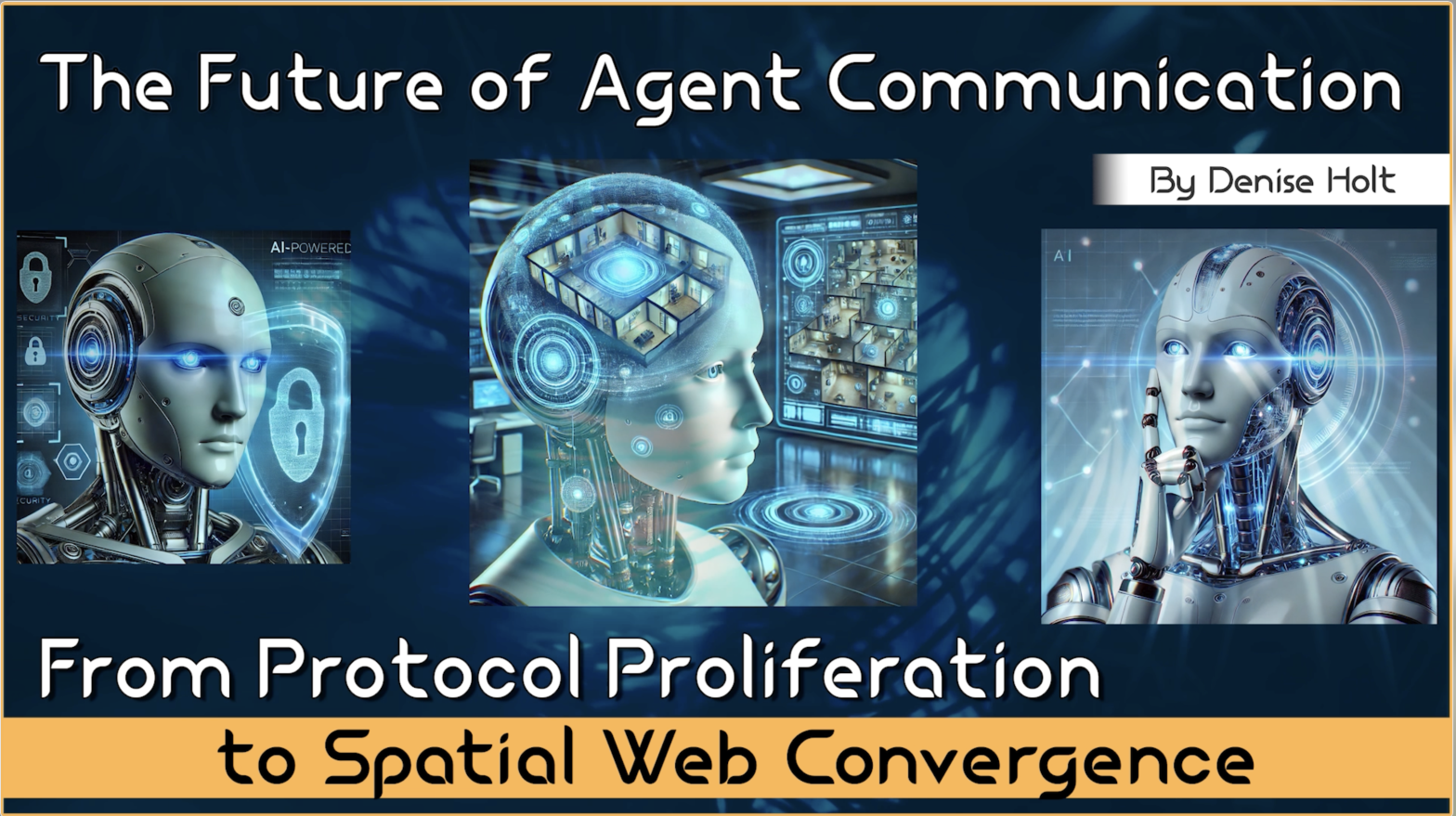
Explore the future of agent communication protocols like MCP, ACP, A2A, and ANP in the age of the Spatial Web and Active Inference AI. Learn how these protocols serve today’s needs—and why they must evolve or integrate with Spatial Web standards to remain relevant.
Category: Blog Articles
Exclusive Inside Look: One-on-One with Cortical Labs’ Chief Scientist - From DishBrain to CL1
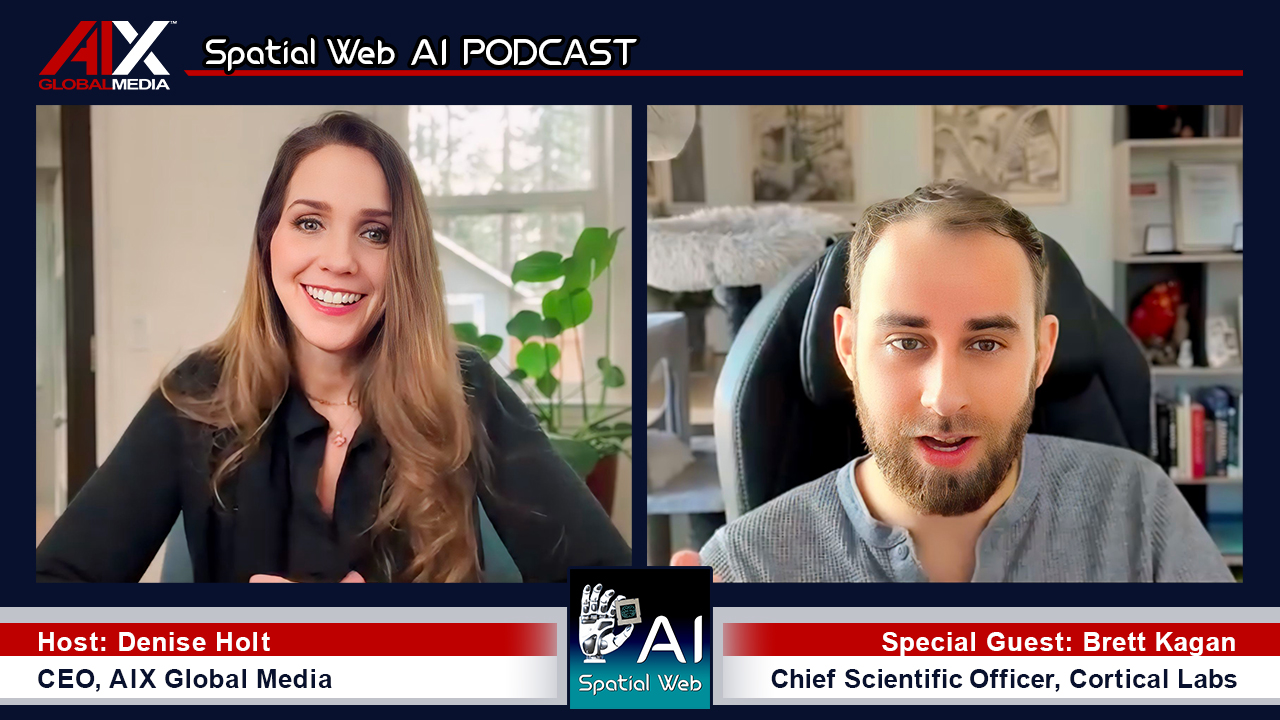
Fusing neurons with silicon chips might sound like science fiction, but for Cortical Labs, it represents what’s possible in AI and computing.
Ten Years Later: Katryna Dow Reflects on Data Privacy & Decentralizd Identity
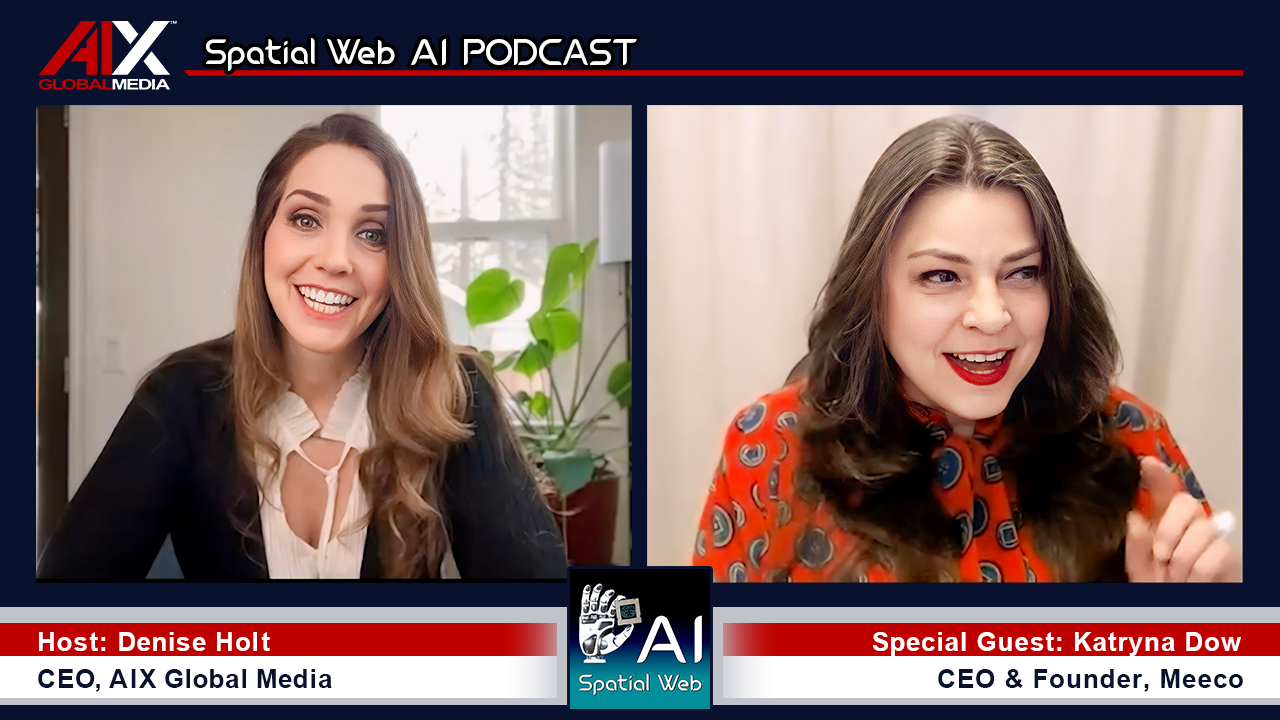
Ten years ago, on March 31, 2015, I interviewed Katryna Dow, CEO and Founder of Meeco, to discuss an emerging concern: personal data privacy. A decade later, Katryna and I reunite to revisit these topics, examining how data privacy, digital identity, and decentralized architectures have dramatically evolved, often validating Katryna’s early concerns.
The Dawn of True AI Agency: Why Active Inference is Surpassing LLMs and Shaping the Future

We stand at a critical juncture in AI that few truly understand. LLMs can automate tasks but lack true agency. AI “agency” represents a fundamental departure from the pattern-matching paradigm of LLMs. It requires systems that can perceive, decide, and act autonomously in an environment while understanding the causal relationships that govern their world.
Active Inference AI: The Future of Enterprise Operations and Industry Innovation
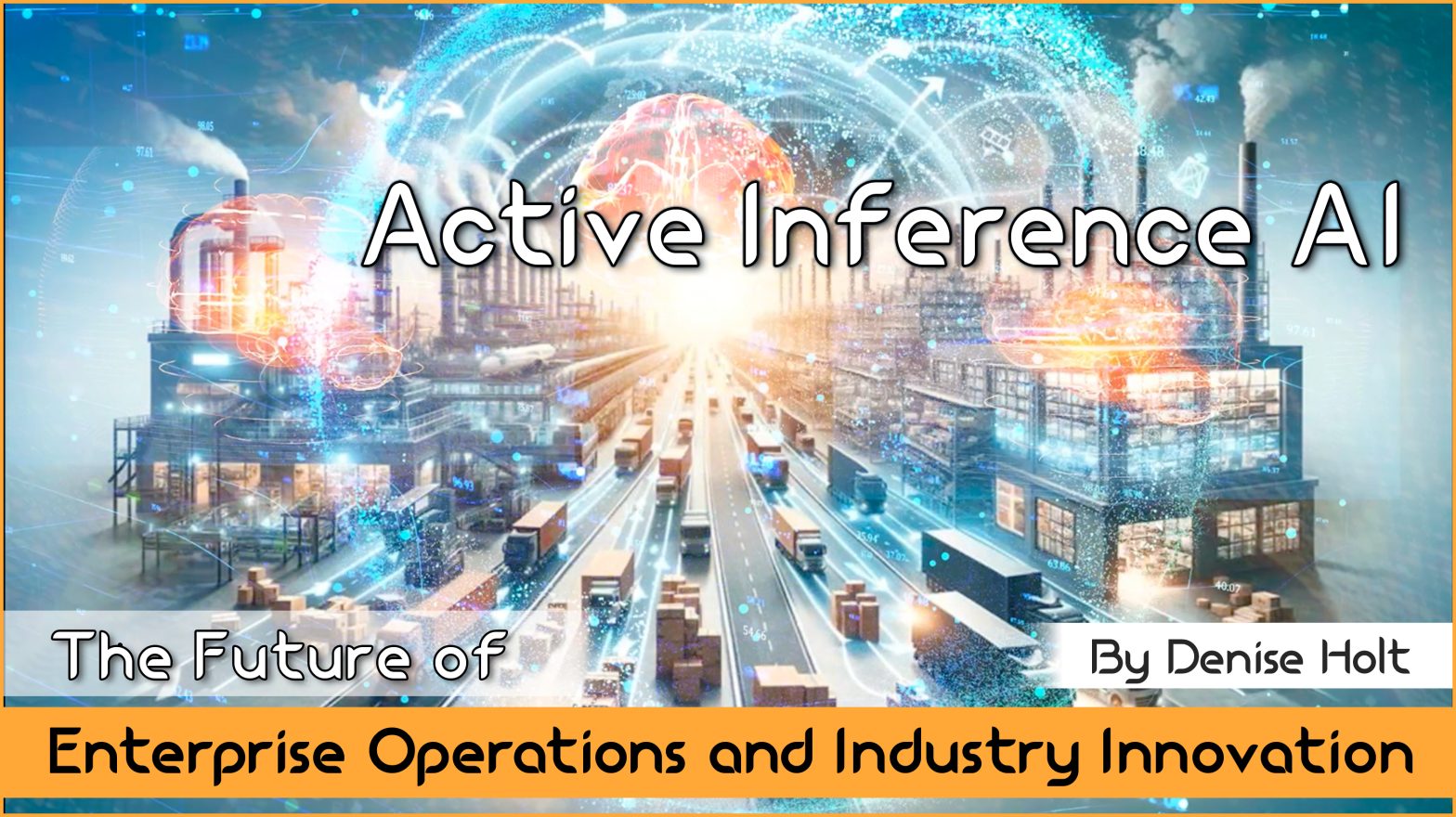
By understanding and adopting Active Inference AI, enterprises can overcome the limitations of deep learning models, unlocking smarter, more responsive, and ethically aligned operations.
Building the Future: How Active Inference AI and the Spatial Web Will Transform Abu Dhabi into the World’s First Truly Smart City
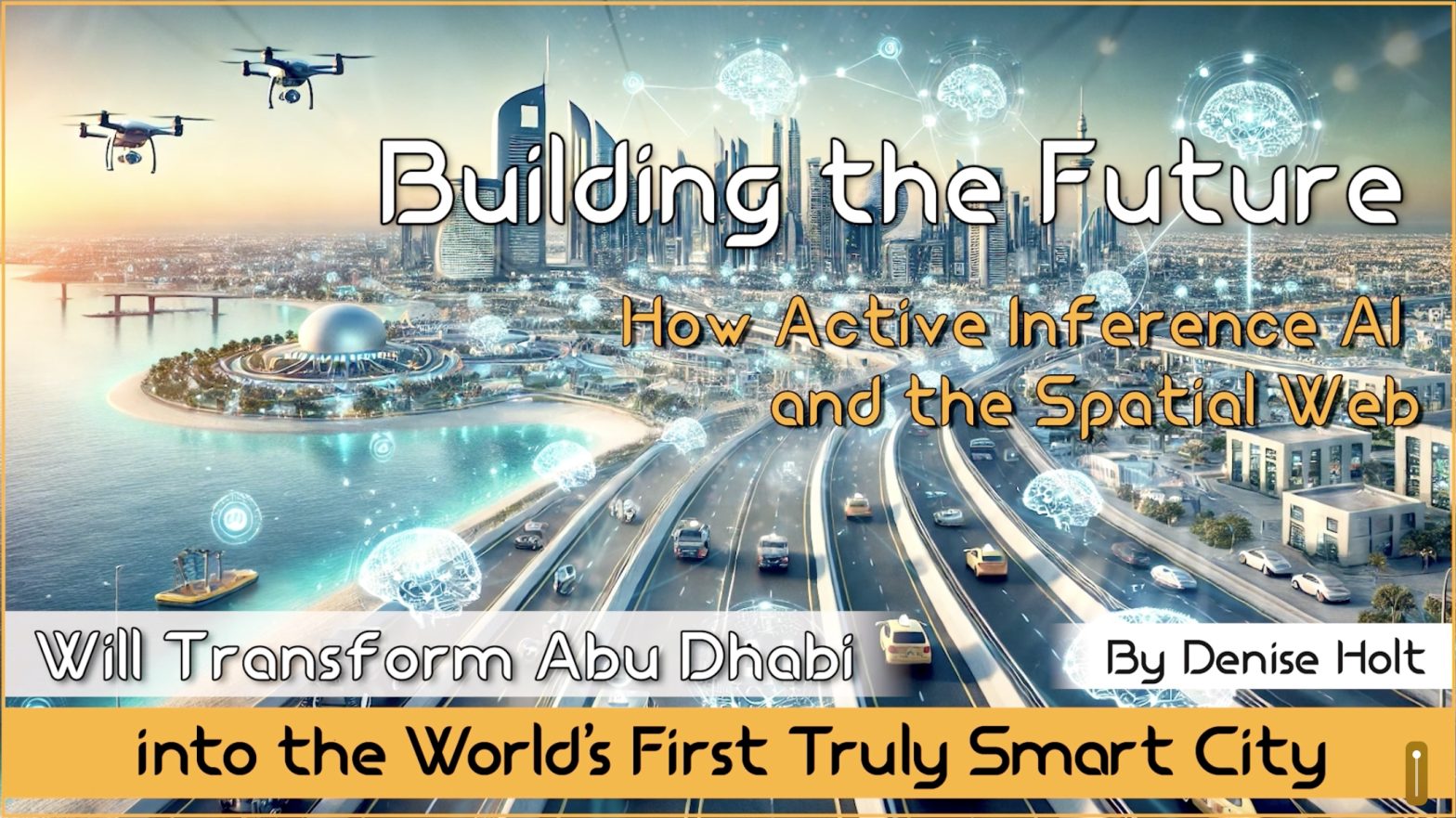
The initiative between VERSES AI and Analog in Abu Dhabi isn’t just about technology - it’s about reinventing urban life. By incorporating Active Inference AI, Spatial Web technologies, and RGMs, Abu Dhabi is creating a new standard for cities, one that integrates all aspects of the digital and physical world into a unified, intelligent system.
Friston’s Latest Research Advances Beyond GenAI With RGM Conceptual Modeling …for Better, Faster, and Cheaper AI

“We’re optimistic that RGMs are a strong contender for replacing deep learning, reinforcement learning, and generative AI.” - Hari Thiruvengada, CPO, VERSES AI
The IEEE Approval of the Spatial Web Global Public Standards: A Technological Awakening for AI
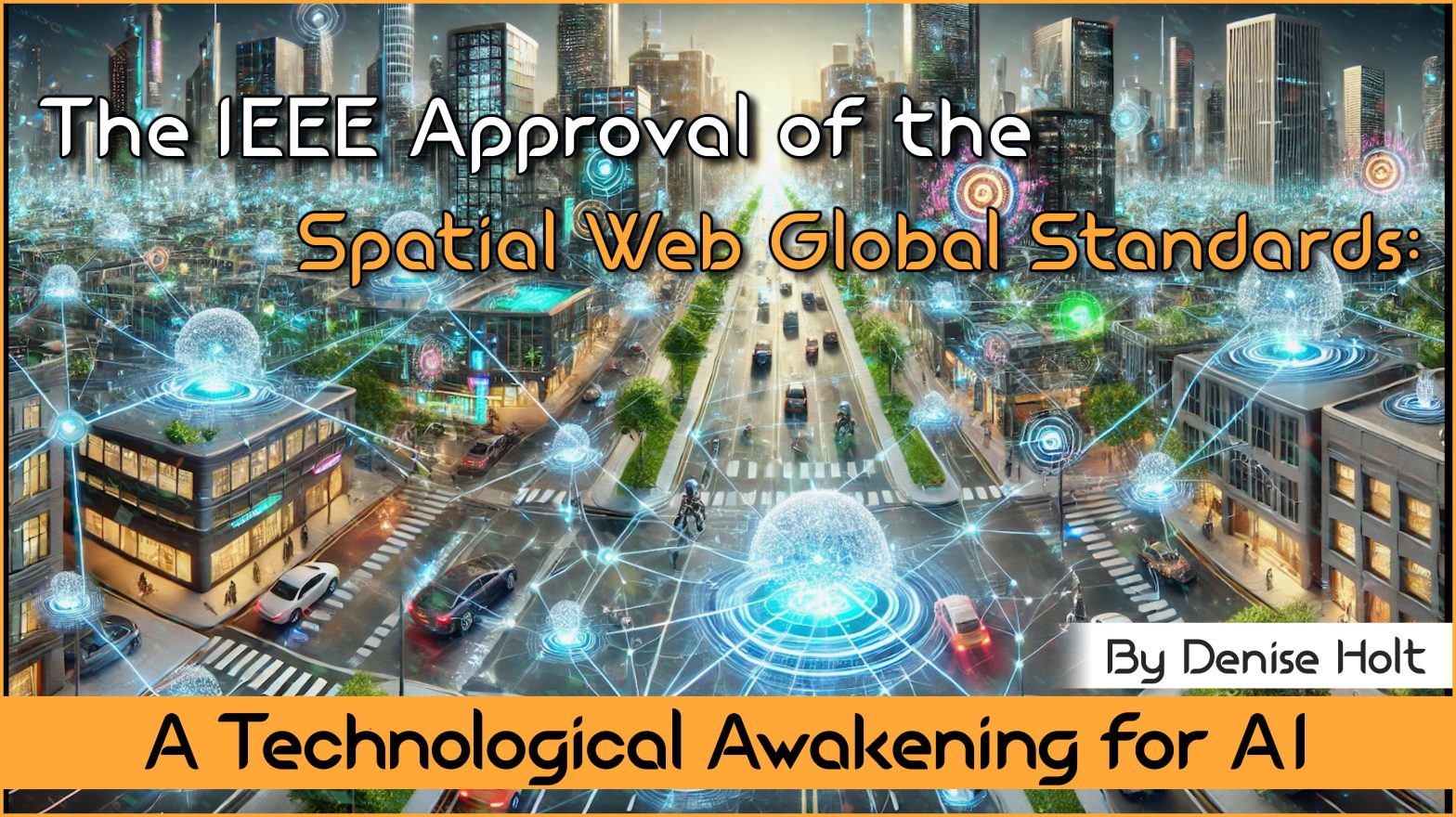
VERSES AI is transforming AI, shifting us towards First Principles AI, Embodied AI, and Decentralized AI, distributing AI compute to Edge devices.
Karl Friston’s Groundbreaking Research Lays the Foundation for Shared ‘Natural’ Super-Intelligence
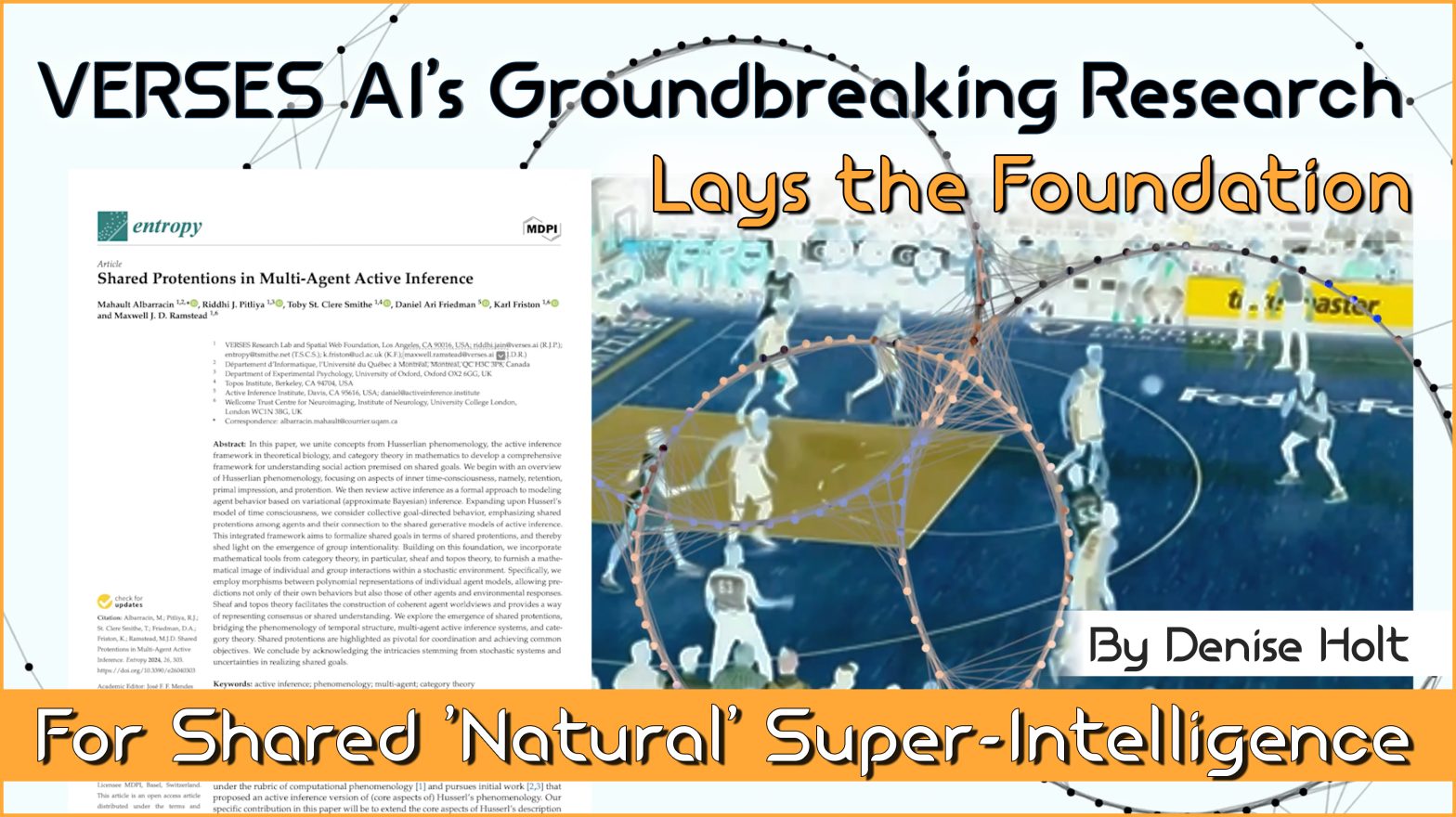
A groundbreaking framework has been introduced by Friston’s research team that could have profound implications for the future of AI and human-machine cooperation.
“Deep Learning is Rubbish” — Karl Friston & Yann LeCun Face Off at Davos 2024 World Economic Forum
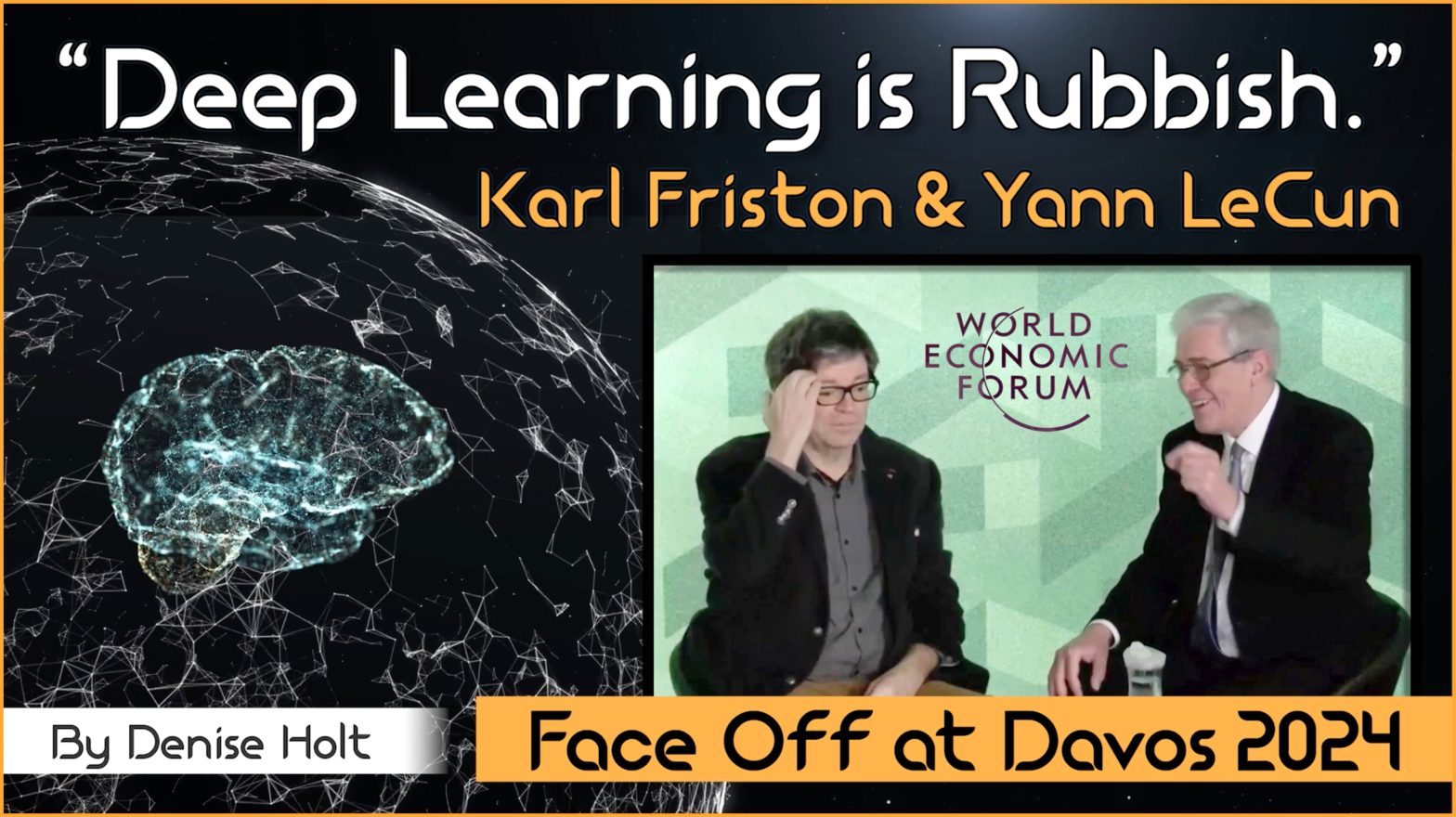
In a panel hosted by the Financial Times at the World Economic Forum in Davos, Switzerland, two of the biggest names in artificial intelligence — Dr. Karl Friston of VERSES AI, and Dr. Yann LeCun of Meta — discussed their aligned, yet contrasting visions for the future of AI, with Friston proclaiming, “Deep Learning is Rubbish,” with Yann LeCun asserting, “The future of AI is non-generative.”
Turning Point in AI - Leaders Rally for a Natural AI Initiative

A pivotal roundtable discussion held by the Boston Global Forum, the Active Inference Institute, and the Neuropsychiatry and Society Program on December 12, 2023, marked a significant turning point in our understanding and development of artificial intelligence.
This group of leaders came together to to discuss a letter signed by 25 neuroscientists, biologists, physicists, policy makers, AI researchers, entrepreneurs, and directors of research labs on a joint initiative proposing a radical rethinking of AI’s trajectory, advocating for a model of AI that is fundamentally different from the data-intensive, computationally expensive systems that dominate today’s landscape.
Their meeting signifies growing momentum behind a new approach to AI called Active Inference, developed by world renowned neuroscientist, Dr. Karl Friston, Chief Science Officer at VERSES AI, that leads to more transparent, ethical and beneficial intelligent systems.
Unlocking the Future of AI: Active Inference vs. LLMs – The World vs. Words
In a world where AI reigns supreme, there is a question looming among the tech elite: Are we on the cusp of true intelligence, or are we merely toying with sophisticated text generators? As we marvel at the prowess of Large Language Models (LLMs) like ChatGPT, Claude, and others, it’s time to investigate a bit further and seek answers. Beyond the hype and fascination, lies a catalyst for change and remarkable innovation, fundamentally redefining what AI means: Active Inference AI.
Revolutionary AI Whitepaper Validated by New Neuroscience Breakthrough
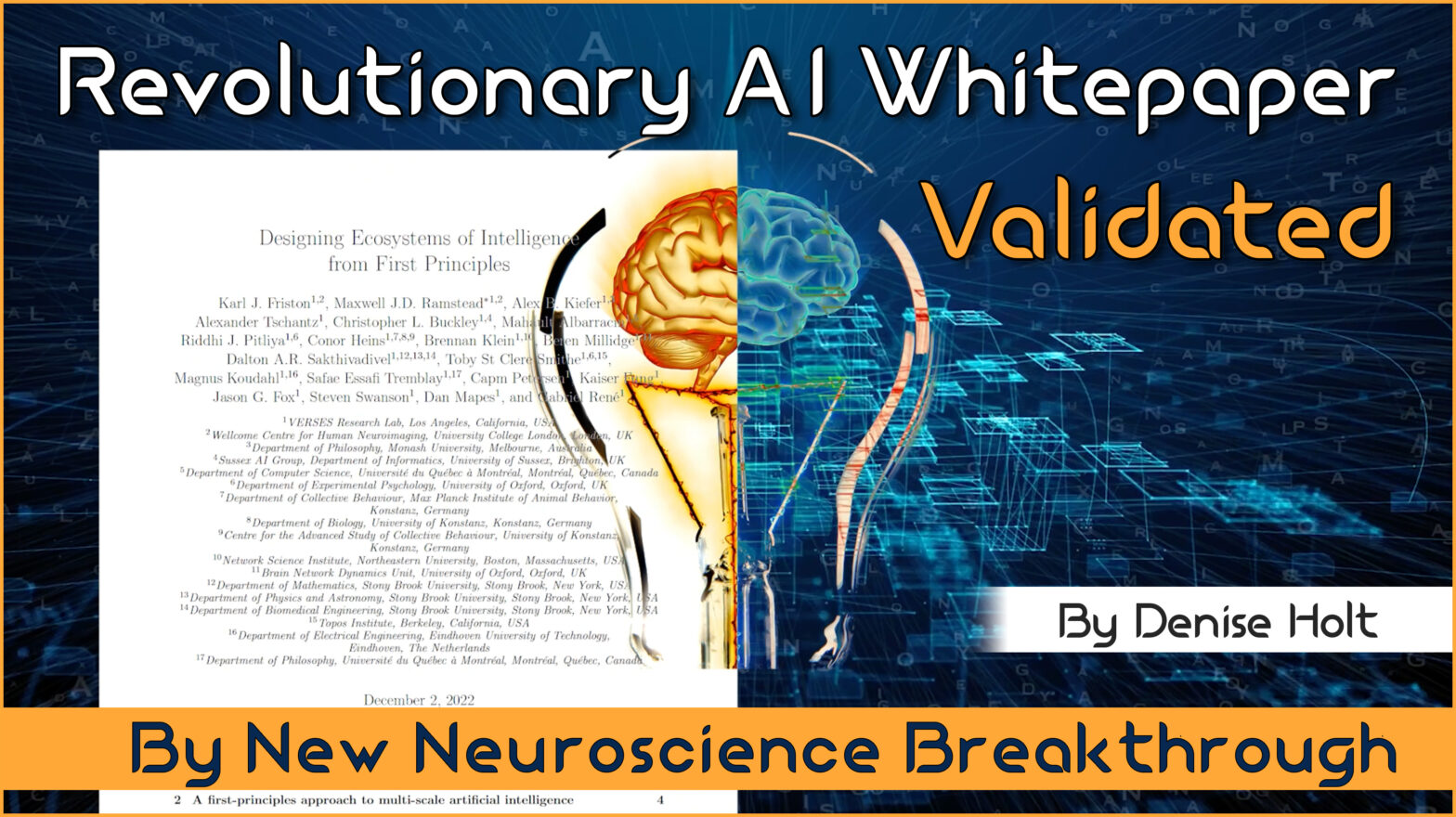
In December 2022, VERSES AI set forth a sweeping vision for artificial intelligence based on a distributed, collective real-time knowledge graph, comprised of Intelligent Agents operating on the physics of intelligence itself. In their whitepaper, titled “Designing Ecosystems of Intelligence from First Principles,” they propose a profound departure from standard notions of AI as a monolithic system. This groundbreaking new artificial intelligence paradigm is gaining momentum, thanks to a major discovery proving its underlying scientific theory – the Free Energy Principle (FEP) by the world’s most cited neuroscientist, Dr. Karl J. Friston.
Friston’s AI Law is Proven: FEP Explains How Neurons Learn
Dr. Karl J. Friston is the most cited neuroscientist in the world, celebrated for his work in brain imaging and physics inspired brain theory. He also happens to be the Chief Scientist at VERSES AI, working on an entirely new kind of AI called Active Inference AI, based on the Free Energy Principle (FEP) — Karl’s theory that has just been proven by researchers in Japan to explain how the brain learns.
“Our results suggest that the free-energy principle is the self-organizing principle of biological neural networks.”
– Takuya Isomura, RIKEN
Revolutionary Proposal Emerges for Effective AI Governance
In the groundbreaking report, “The Future of Global AI Governance”, VERSES AI offers the framework for an ethical and cooperative path forward for AI and humans to grow in tandem with each other, learning, adapting, and adjusting as needed along the way.